SHEET TWENTY-FOUR

book contet
PART ONE | the task roulette:
  1. PUT UP A SIGN AT THE END OF YOUR STREET SAYING Y’ALL COME BACK NOW, YA HEAR.
  2. GET A WAGON AND TAKE TURNS PULLING EACH OTHER.
  3. PAINT AN ABSTRACT PICTURE WHILE BLINDFOLDED.
PART TWO | how I solved it:

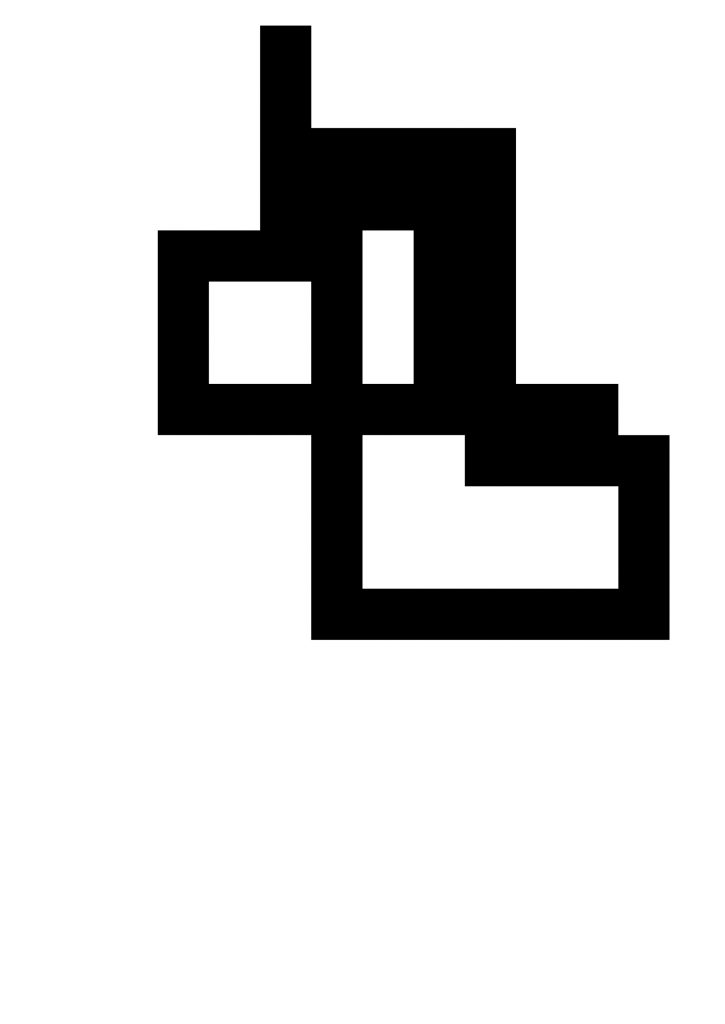
+ 19 rows and 12 columns table with a cell of 2 units height and 2 units width. Centred.


THE DRAWING
+ The blindfold was replaced by rules of a 3 step, made-up painting game:

STEP ONE, the starting point for the picture is defined: The columns are from left to right numbered with numbers from 1 to 12, and thus determine the horizontal coordinate, while the rows are bottom-up numbered with numbers from 1 to 19 and determine the vertical coordinate. For each, a value is determined via Chrome random number generator; the starting point of the abstract painting to be painted is the junction of both coordinates.

STEP TWO, the first 12 ‘random strokes’ of the painting are determined: each stroke is specified with its length and its direction. The length (number of cells) is defined with a dice, and its direction with a List Randomizer at random.org. Possible options are left, right, up or down.
However, for these first 12 strokes of the painting, only that direction could be chosen which will not cross the outline of the drawing field. Thus if the first suggested direction from the random list was not appropriate the next was selected. But I could move up and down, left or right on already used/marked out cells or fields.

STEP THREE, the final layout of the painting is determined: after these 12 initial strokes, the game went on until the outline of the drawing field was (to be) crossed. The same direction generator is used, but only the first suggestion from the list is considered, whatever the outcome.

PART THREE | few samples:
CHECK OUT ALL THE 18 IMAGES
SCROLL THROUGH THE BOOKS

SHEET TWENTY-THREE

book contet
PART ONE | the task roulette:
  1. MAKE A RECIPE SCRAPBOOK.
  2. SEE HOW MANY STEPS IT IS FROM YOUR FRONT DOOR TO THE STREET.
  3. GO TO AN EASTER EGG HUNT.
PART TWO | how I solved it:

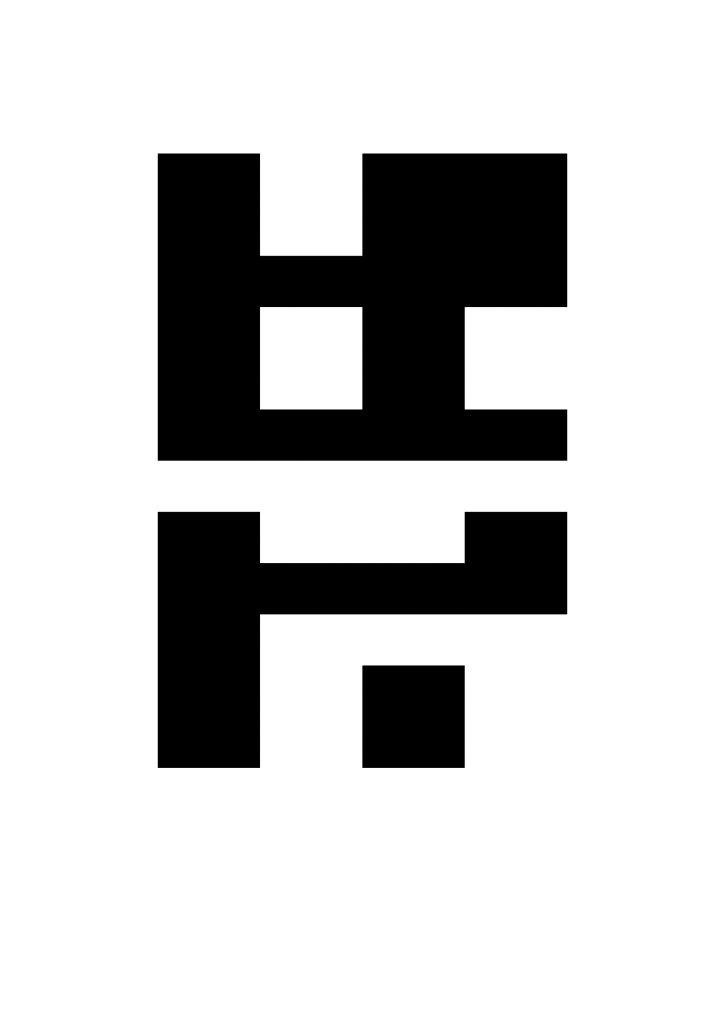
+ 6 rows and 9 columns table with a cell of 4 units height and 4 units width,
+ 90 degree CCW rotated, and centred.
+ Each row represents one random sequence of nine numbers (one number per cell).


THE DRAWING

+ There was no Easter Egg hunt available when I made the task, thus I made-up an Easter Egg hunt bingo like game:
+ Using a random sequence generator at http://www.random.org each row of the table got its own random sequence of numbers from 1 to 9, one number for each cell.
+ After that, one additional sequence of the same numbers was selected using the same generator; this was the so called winning sequence.


+ IN the final drawing image those cells of the table are painted black, that hold a number that matches the number of the winning sequence. (Same number, same position within the sequence.)

PART THREE | few samples:
CHECK OUT ALL THE 18 IMAGES
SCROLL THROUGH THE BOOKS

SHEET TWENTY-TWO

book contet
PART ONE | the task roulette:
  1. GET SOME NEW RINGTONES.
  2. RENT A METAL DETECTOR AND HUNT FOR TREASURE.
  3. PLAY NAME THE TUNE AND SEE WHO KNOWS THE SONG QUICKER.
PART TWO | how I solved it:

+ 5 rows and 5 columns table with a cell of 4 units height and 4 units width,
+ 8 units from the top edge, vertically centred.
+ Each cell represents one question of the quiz.


THE DRAWING

+ I tested my knowledge of popular songs at musicmini.com.
+ Since, I was born in 1979, I choose to challenge myself with songs from 1980 onwards.


STARTING with the upper left cell, and working across to the right the cell is painted black for answering the question correctly. The incorrect answers are marked with a blank/white cell.

PART THREE | few samples:
CHECK OUT ALL THE 18 IMAGES
SCROLL THROUGH THE BOOKS

SHEET TWENTY-ONE

book contet
PART ONE | the task roulette:
  1. USE PAPER TOWEL ROLLS AS DRUMSTICKS. DO YOUR BEST DRUM SOLO.
  2. GET A COOL APP FOR YOUR PHONE.
  3. PLAY TWISTER ON THE FRONT LAWN.
PART TWO | how I solved it:

+ 4 rows and 4 columns table with a cell of 8 units height and 4 units width. Centred.
+ Each cell represents a move-combination called by the twister spinner; therefore it is furthermore divided into an upper and lower half.


THE DRAWING

+ Each element has its corresponding visual sign designed.
+ The upper half of the cell shows the marked out body part (left or right, hand or foot), while the lower half equals to the determined colour: red, green, blue or yellow.


+ STARTING in the upper left cell, and working across to the right, the drawing image is a transcription of the 16 twister pairs called by the twister spinner at http://wheeldecide.com

PART THREE | few samples:
CHECK OUT ALL THE 18 IMAGES
SCROLL THROUGH THE BOOKS

SHEET TWENTY

book contet
PART ONE | the task roulette:
  1. SPEND THE NIGHT AT THE CEMETERY AND WATCH FOR GHOSTS.
  2. PLAY ROLLER HOCKEY ON THE TENNIS COURTS.
  3. MAKE PAPER AIRPLANES AND SEE WHOSE GOES THE FARTHEST.
PART TWO | how I solved it:

+ 2 rows and 2 columns table with a cell of 12 units height and 16 units width,
+ 90 degree CCW rotated, and centred.
+ Each cell represents one of 4 iteration of the assigned task.


THE DRAWING
+ I made 4 paper airplanes and numbered them with a serial number from 1 to 4. For a round each plane was thrown to the air once, to measure which of the 4 travels the farthest.

+ To transcript the results into a drawing, the base-grid was transformed into a (kind of) coordinate system, where the central lines of the base-grid are used as the x and y axis: the x axis shows the distance of each airplane and the y axis shows the serial number of the airplane.
+ The first round is depicted in the top right cell, the second in the bottom right cell, the third in the bottom left cell, and the fourth round in the upper left cell.


+ THE final image is a shape that we get if we connect all the results within the coordinate system, and paint it black.

PART THREE | few samples:
CHECK OUT ALL THE 18 IMAGES
SCROLL THROUGH THE BOOKS

SHEET NINETEEN

book contet
PART ONE | the task roulette:
  1. WATCH AN OLD BLACK AND WHITE MOVIE.
  2. WRITE A POEM ABOUT A BIG, BLUE, BOUNCY BALL.
  3. BUY A BOX OF CHOCOLATE AND SHARE IT WITH A FRIEND.
PART TWO | how I solved it:

+ 6 rows and 3 columns table with a cell of 6 units height and 6 units width. Centred.
+ The drawing grid imitates the actual grid of the selected chocolate bar; each cell equals to one slice of the chocolate.


THE DRAWING

+ To stay as close to randomness as possible my friend here, to whom I offered the chocolate was the random sequence generator at random.org (but in the end it was me eating up all the pieces 🙂 )
+ First all the cells were randomly numbered with the help of the mentioned generator. Then a new random list of only 9 numbers between 1 and 18 was selected using the same random generator.


+ THESE numbers represented the cells or chocolate slices I was able to eat away. And thus the final drawing shows those cells or chocolate slices that stayed untouched during the task.

PART THREE | few samples:
CHECK OUT ALL THE 18 IMAGES
SCROLL THROUGH THE BOOKS

SHEET EIGHTEEN

book contet
PART ONE | the task roulette:
  1. GO TO THE SHOOTING RANGE.
PART TWO | how I solved it:

+ 2 rows and 2 columns table with a cell of 10 units height and 10 units width. Centred.
+ Each cell represents one set of 10 shots.


THE DRAWING

+ To mimic a shooting target the base-grid was divided into 10 evenly spaced concentric rings/squares, with score values from 10 through 100 (rising by 10 points towards the centre).
+ Using a shooting simulator at www.hlberg.dk/eurosimulator I made my 4 rounds of 10 shots for each drawing, and recorded the scores that I achieved.


+ FOR the drawing, these results were marked accordingly into my base-grid, to draw a square shape with matching side lengths.
+ However, the final drawing is an inverse picture of the received shape: the achieved result is white, while the rest of the ‘ shooting target’ – square is painted black.
+ The first round is depicted in upper left cell, the second in the upper right cell, the third in the bottom left and the last one in the bottom right cell.

PART THREE | few samples:
CHECK OUT ALL THE 18 IMAGES
SCROLL THROUGH THE BOOKS

SHEET SEVENTEEN

book contet
PART ONE | the task roulette:
  1. GO TO A HIGH END FURNITURE STORE AND DREAM.
  2. HAVE A SÉANCE.
  3. COUNT ALL THE CHANGE THAT YOU HAVE IN YOUR COIN BANK.
PART TWO | how I solved it:

+ 20 rows and 14 columns table with a cell of 2 units height and 2 units width.
(This grid actually covers the whole page of the notebook I am using for the project).


THE DRAWING

+ The grid used in the book was proportionally transcribed onto a sheet of A3 paper, and attached to a flat surface (to the ground). Then I opened my wallet and let the coins fall onto the surface. (Same amount of coins, same height, and a same position was used for each book; at least I tried my best).
+ The coins rolling out the grid-paper were not considered for the final drawing.


+ The drawing is showing the final position of dropped coins within the used grid; each cell that is touched by a coin is painted black.

PART THREE | few samples:
CHECK OUT ALL THE 18 IMAGES
SCROLL THROUGH THE BOOKS

SHEET SIXTEEN

book contet
PART ONE | the task roulette:
  1. GO TO THE ARCADE AND PLAY SKEEBALL. SEE WHO GETS THE MOST TICKETS.
PART TWO | how I solved it:

+ 4 rows and 4 columns table with a cell of 6 units height and 4 units width,
+ 6 units from the top edge, vertically centred.
+ Each cell represent one repetition of the assigned task.


THE DRAWING

+ The required game is not popular or available here, so I created something similar to skeeball. The object of my game was to get a small (tennis) ball into one of the three provided baskets, placed beneath the inclined lane.
+  I had one go for each cell; unless none of the baskets was hit, then I could do a second try.


CORRESPONDING with the game set up, each cell of the base-grid is vertically divided into 3 equal parts; each box represents one of the three baskets used.
+ Starting in the upper left cell, and working across to the right; for each drawing I rolled the ball 16 times up the inclined lane, and recorded if and which of the three baskets did I managed to hit:
If the ball stopped in the basket nearest to the desk, the bottom third of the cell is painted black. For the middle basket, two-thirds of the cell is painted black. If the one farthest is hit, the whole cell is painted black. For the missed balls, the cell stayed blank/white.

PART THREE | few samples:
CHECK OUT ALL THE 18 IMAGES
SCROLL THROUGH THE BOOKS
SHEET FIFTEEN

book contet
PART ONE | the task roulette:
  1. CREATE YOUR OWN FUNNY BUSINESS CARD ONLINE.
  2. DO THE CRAB CRAWL THROUGH YOUR HOUSE.
  3. GO TWILIGHT BOWLING.
PART TWO | how I solved it:

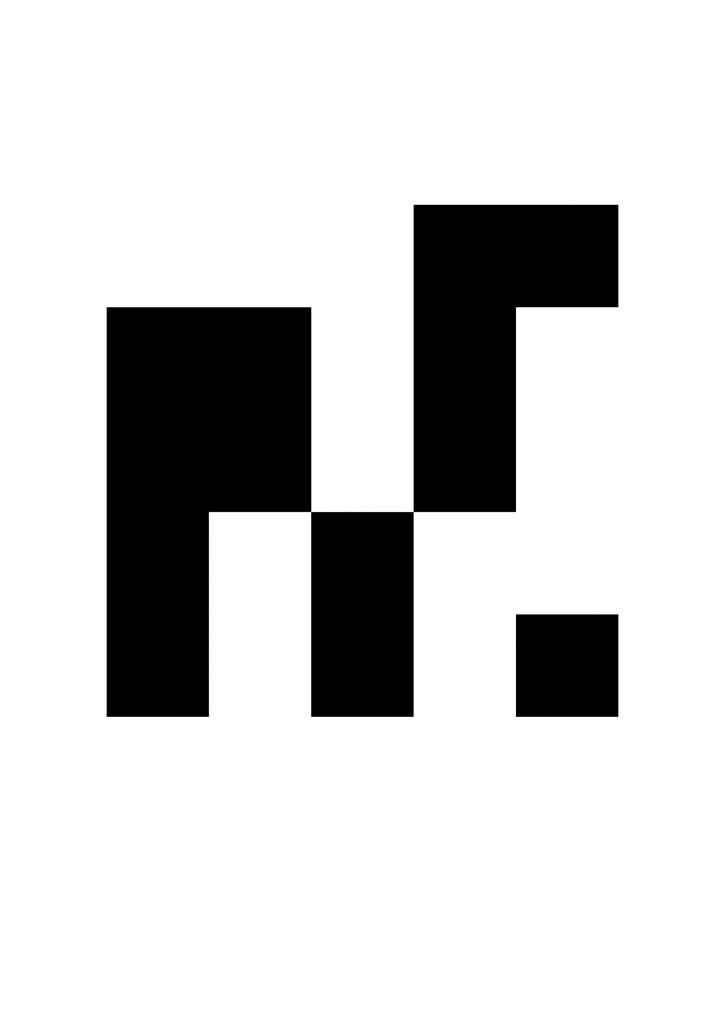
+ 2 rows and 2 columns table with a cell of 12 units height and 14 units width. Centred.
+ Inside each cell of the base grid, there is another 4 rows and 7 columns table, with a cell of 3 units height and 2 units width. However, from all the 28 cells only those are used for the drawing that, according to the ground plan correspond to the actual layout of the bowling pins. Where the front pin is always on the horizontal centre line of the base-grid, or with other words the bottom two bowling tables are a mirror image of the upper two ones.


THE DRAWING

+ (… I was really keen to go out, but there is no bowling place at my town any longer.) At gamesgames.com I played 4 bowling rounds for each drawing image or book, and painted black the cells of those pins knocked down on the first roll; the pins knocked over on the second shot were not considered.
+ First round is in the upper left cell, second in the upper right cell, third in the bottom left and the last one in the bottom right cell.

PART THREE | few samples:
CHECK OUT ALL THE 18 IMAGES
SCROLL THROUGH THE BOOKS